Enabling the circular future of healthcare.
Mackwell Health builds technology that helps healthcare cut single use waste for good - enabling reusable device pathways through reliable, auditable UV-C decontamination, and helping providers meet the DHSC Design for Life commitment to eliminate avoidable single use medtech.
Healthcare systems face mounting sustainability pressure.
Healthcare is one of the most resource intensive sectors in the UK economy - generating significant volumes of clinical waste, consuming large quantities of single use products and contributing meaningfully to the NHS's carbon footprint.
Sustainability targets, net zero commitments and procurement pressure are converging - creating both a need and an opportunity to rethink clinical workflows around reusability, traceability and responsible resource management.
High-value reusable devices are too often forced down single use pathways.
High-value reusable capable devices - endoscopes, ultrasound and TEE probes, laryngoscopes and video laryngoscopes - carry significant procurement and replacement cost wherever safe reuse is not enabled.
Single use products generate clinical waste that requires specialist handling, treatment and disposal - adding operational complexity and cost while contributing to carbon impact.
Manufacturing, packaging, transport and disposal of single use products carries a meaningful carbon footprint - one that grows with volume and frequency of use across healthcare systems.
Heavy reliance on single use products ties clinical continuity to external supply chains - exposing services to shortages, lead-time delays and price volatility whenever disruption hits.
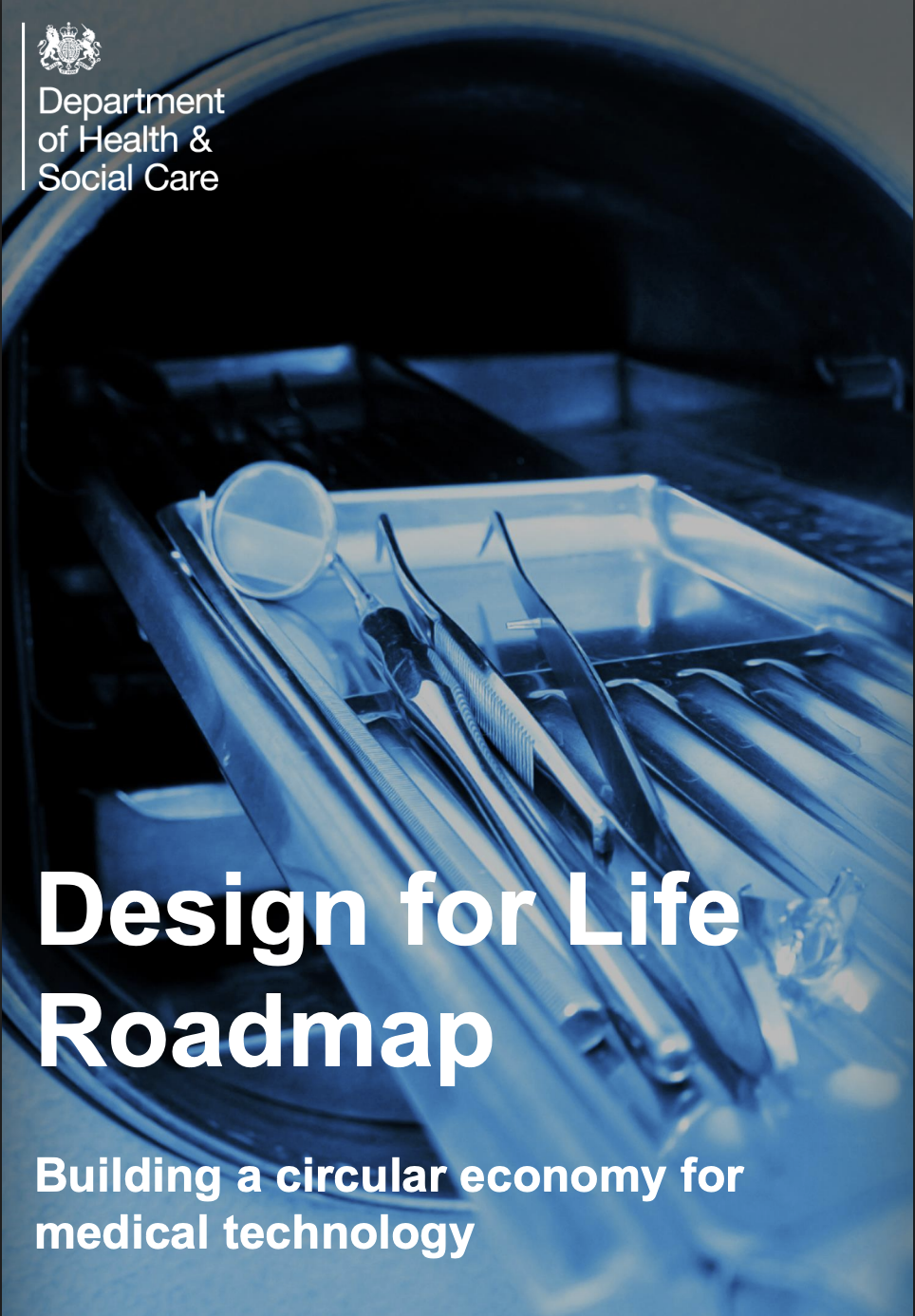
The Design for Life roadmap.
Published by the Department of Health & Social Care, the Design for Life roadmap sets out the Government's plan for building a circular economy for medical technology - including the ambition to eliminate avoidable single use medtech.
Reusable device pathways, supported by reliable and auditable decontamination, are central to that direction of travel. Mackwell Health's platform is built to help providers move with it.
Read the roadmap on GOV.UKSource: Department of Health & Social Care. Contains public sector information licensed under the Open Government Licence.
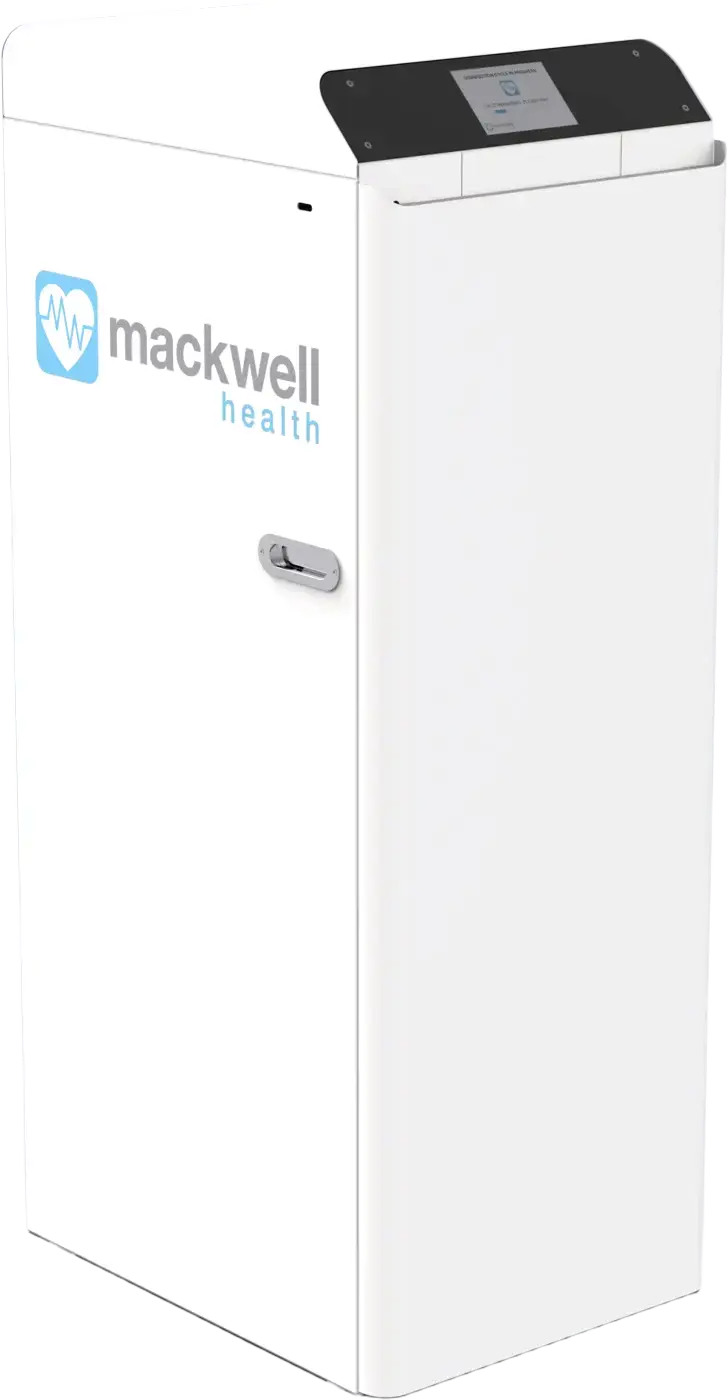
illuvi® HD2 - the platform behind reusable device pathways.
Enclosed, mercury-free UV-C chambers designed to make reusable device pathways practical - delivering repeatable, auditable high-level disinfection so providers can reduce single use dependency in line with the Design for Life direction of travel.
Reusable workflows, supported by reliable decontamination.
Enabling safe, auditable reuse of high-value medical devices - endoscopes, ultrasound and TEE probes, laryngoscopes and video laryngoscopes - supported by reliable, repeatable decontamination workflows, protects clinical assets while reducing single use dependency.
Reliable decontamination
UV-C enclosed chamber systems designed to deliver consistent, repeatable decontamination of reusable devices - cycle after cycle.
Policy alignment
Reusable device adoption supports the DHSC Design for Life roadmap and its goal of eliminating avoidable single use medtech - helping providers align with national sustainability policy.
Repeatable process
Standardised workflow design ensures decontamination is performed consistently - not subject to operator variation or protocol drift.
Reduced procurement dependency
Where reusable workflows replace single use pathways, procurement pressure and supply chain risk are both reduced.
Value based procurement
Reusable device pathways support value based procurement - helping teams weigh whole life cost, clinical outcomes and carbon impact, not unit price alone.
Innovation passports
Structured evidence and workflow documentation designed to support innovation and adoption pathways - helping procurement and innovation teams evaluate reusable device pathways against local value criteria.
Lower waste volumes
Fewer disposables consumed means less clinical waste generated - reducing handling cost, disposal burden and carbon impact.
Scalable pathways
illuvi® HD2 systems are designed to scale - from point of care single units to department wide or multi-site deployment.

Healthcare that heals without costing the earth.
How we support sustainable healthcare workflows.
Supports reusable device workflows
Enclosed UV-C decontamination systems designed to support repeatable, auditable workflows for reusable medical devices - the practical foundation of a reduced single use strategy.
Provides digital auditability
Connects every decontamination cycle to a digital compliance record - essential for demonstrating the integrity of reusable device pathways to governance and regulatory audiences.
Supports environmental decontamination
Room UV-C decontamination designed to support controlled environmental decontamination workflows - adding an infection prevention layer to clinical spaces without chemical dependency.
Connects device, room and system level
An integrated platform designed end to end to support safer, more traceable and more sustainable clinical decontamination - bringing device, environmental and digital layers into a single coherent workflow.

The circular case is also the commercial case.
By enabling reusable workflows, healthcare providers may be able to reduce disposable consumption, waste handling burden, procurement pressure and associated carbon impact - while improving workflow consistency and compliance auditability.
Talk to us about sustainable decontamination pathways.
Whether you're exploring reusable device workflows, developing a sustainability strategy, or looking for practical alternatives to single use pathways for high-value devices - our team is ready to help.